Differences Between Plastic Optical Fiber And Quartz Optical Fiber
Among the various types of optical fibers, two prominent variants are plastic optical fiber (POF) and quartz optical fiber (QOF). Despite serving similar purposes, these two types exhibit distinct characteristics that make them suitable for different applications. Here, we explore the differences between POF and QOF:
1. Material Composition:
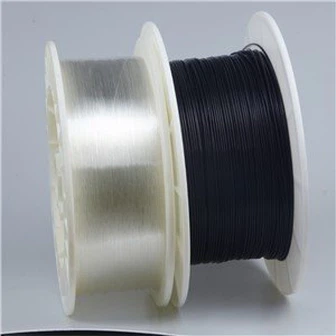
POF is composed of a polymer core, typically made of polymethyl methacrylate (PMMA) or perfluorinated polymers, surrounded by a cladding layer of lower refractive index material, usually fluorinated polymers.
QOF consists of a core made of high-purity silica glass (quartz) with a high refractive index, surrounded by a cladding layer of slightly lower refractive index silica glass.
2. Transmission Characteristics:
POF is characterized by a larger core diameter (typically 0.5 mm to 1 mm) compared to QOF. This larger core diameter results in higher attenuation (signal loss) and dispersion (signal spreading) compared to QOF.
QOF features a smaller core diameter (typically around 9 µm to 62.5 µm for single-mode fibers), which enables lower attenuation and dispersion, making it suitable for long-distance transmission and high-speed data applications.
3. Bandwidth and Speed:
Due to its larger core diameter and higher attenuation, POF typically offers lower bandwidth and slower data transmission speeds compared to QOF.
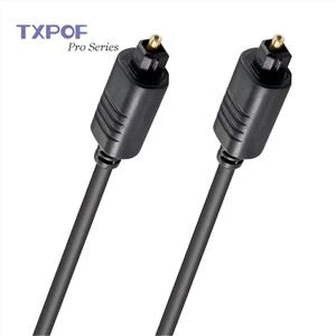
POF is commonly used for short-distance applications such as home networking, automotive communication, and industrial networking.
QOF provides higher bandwidth and faster data transmission speeds, making it ideal for long-distance telecommunications, high-speed internet, and data center interconnectivity.
Cost and Flexibility:
POF is more cost-effective than QOF and is easier to install and terminate. Its flexibility and robustness make it suitable for applications where flexibility is crucial, such as automotive and home networking.
QOF is more expensive than POF due to the manufacturing process and the high-quality materials used. However, its superior performance and durability justify the higher cost, especially for applications requiring high-speed and long-distance transmission.