AI Drives Next Wave of Optical Communication Expansion
A new report from Morgan Stanley, "Focus: Opportunities in the Optical Communication Market," highlights that artificial intelligence is pushing optical communication technology into a second phase of large-scale expansion. Explosive growth in bandwidth and the physical limits of electrical interconnects are forcing a transformative shift in global computing architecture, opening a trillion-dollar market and reshaping industry profit structures.
Market Projections:
Under a baseline scenario, the global optical communication market is projected to reach approximately $30 billion in 2025, surpassing $65 billion by 2028-a compound annual growth rate of about 30%. With an additional $23 billion from new technologies such as copper-to-fiber migration, co-packaged optics (CPO), and out-of-band management, the long-term total addressable market (TAM) could approach $90 billion.
Industry Dynamics:
The core uncertainty lies not in the direction of technology, but in the timing of adopting disruptive architectures and long-term price/profit stability. While the industry historically saw annual price declines of 10–15%, recent component shortages have stabilized or even increased prices. Stock prices in the fiber sector have surged over 300% in the past 12 months, trading at 30–40 times estimated earnings for fiscal 2028, indicating high sensitivity to any slowdown in AI capital expenditure or price erosion in lasers/transceivers.
Copper-to-Fiber Transition & Plastic Optical Fiber (POF):
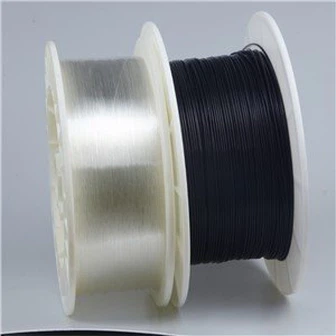
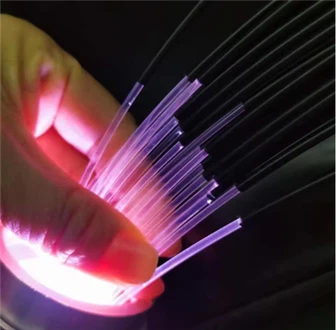
A key incremental opportunity-worth about $6.5 billion-comes from replacing copper with fiber. In this shift, plastic optical fiber (POF) is emerging as an optimal solution for short-reach (under 100 meters) AI data center interconnects, offering lower cost, reduced power consumption, easier deployment, and strong electromagnetic interference resistance. POF is gaining adoption in GPU cluster connections, CPO ecosystems, out-of-band management, and short-distance data center interconnects.
Demand Shifts Driven by AI:
Cloud AI Data Centers are becoming the dominant demand source, expected to grow from 28% of the fiber market in 2021 to 78% by 2030.
Power Constraints are creating a "data multiplier effect," increasing the need for data center interconnects as distributed computing grows.
Architectural Change: CPO is set to replace traditional pluggable modules, improving power efficiency and density, with an estimated 15% penetration by 2028.
POF Applications in AI Infrastructure:
GPU/server short-reach interconnects within AI clusters
Board- and chip-level optical connectivity for CPO
Passive optical out-of-band management networks
Short-reach DCI for distributed AI computing

Investment Considerations:
Morgan Stanley notes that Corning appears well-positioned for the long-term copper-to-fiber transition, while Lumentum faces risks from mean reversion in margins and pricing. For POF-focused companies, opportunities lie in advancing high-speed POF technology, integrating with CPO ecosystems, and expanding module integration capabilities for AI data centers.
Risks:
Key risks include the pace of CPO adoption (expected 2027–2030), long-term price pressure, POF technical limitations in longer distances, and high valuations in the optical sector that may correct if AI capex slows.
Outlook:
The report concludes that while traditional silica fiber will continue to dominate long-haul markets, POF is poised to become the foundational solution for short-reach AI data center connectivity over the next decade, supported by accelerating demand, concentrated supply, and attractive valuations relative to the broader optical segment.


contact us:
Cynthia Wang
Jiangsu TX Plastic Optical Fibers Co., Ltd.
Website: www.fibretx.com | Email: cgy@txpof.com
Mobile: +86-19505282860 (wechat/whatsapp)