Unlocking Simplicity and Cost-Effectiveness: A Guide to 650nm Plastic Optical Fiber Transceivers
What is a 650nm POF Transceiver?
A POF transceiver system consists of two primary components: a Transmitter and a Receiver.
- The Transmitter: This device converts an incoming electrical signal (digital data) into optical signals. It uses a Light Emitting Diode (LED) or a Resonant Cavity LED (RCLED) that emits red visible light at a wavelength of 650 nanometers (nm). This light is then coupled into the core of the Plastic Optical Fiber.
- The Receiver: Located at the other end of the fiber, the receiver contains a photodiode (typically a PIN photodiode) that detects the 650nm light pulses. It then converts these pulses back into an accurate electrical data stream.
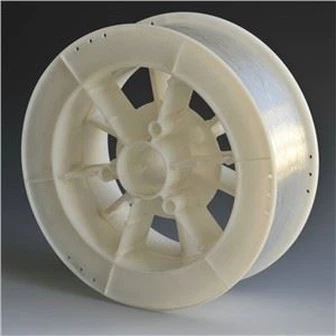
The "plastic" in POF is the key differentiator. Unlike glass fibers, POF has a large core diameter (typically 0.5 mm or 1 mm), making it extremely easy to handle, connectorize, and install without specialized tools or expensive training.


Key Product Characteristics & Performance
650nm POF transceivers are defined by a set of specific technical attributes that make them suitable for their target markets.
They are designed to operate on low voltages (e.g., 3.3V or 5V) and feature standard digital interfaces like TTL, LVTTL, or PECL, ensuring easy integration with common microcontrollers, FPGAs, and industrial PLCs.
Distinct Advantages over Other Technologies
The popularity of 650nm POF transceivers stems from their compelling benefits compared to copper cabling or glass optical fiber.
- Immunity to Electromagnetic Interference (EMI): As an optical medium, POF is completely immune to EMI, RFI, and crosstalk. This is critical in electrically noisy environments like factories, automotive engine bays, and medical imaging rooms.
- Electrical Isolation: POF provides perfect galvanic isolation between devices, preventing ground loops and protecting sensitive equipment from voltage spikes and lightning strikes.
- Ease of Installation & Low Total Cost: The large core allows for high coupling efficiency from the LED, eliminating the need for expensive precision alignment. Installation is quick, requiring minimal training, which drastically reduces the total cost of ownership.
- Durability and Flexibility: POF cables are highly flexible, shock-resistant, and can withstand repeated bending, making them ideal for applications in moving machinery or vehicles.
- Safety: The 650nm light is low-power and visible, posing no eye-safety risks under normal operating conditions, unlike invisible infrared lasers used in high-speed fiber optics.
Detailed Applications
The combination of these advantages makes 650nm POF transceivers the ideal choice in several key industries:
Ideal for simple, point-to-point data links between equipment in research labs, test benches, and within industrial machinery where electrical isolation is needed over short distances.
Conclusion
650nm Plastic Optical Fiber transceivers may not compete with high-speed core network technologies on raw bandwidth, but they excel brilliantly in their niche. They solve critical problems of EMI, cost, and complexity for short to medium-range data links. By offering a robust, easy-to-use, and highly reliable optical solution, they continue to be a foundational technology for engineers designing systems for harsh, electrically noisy, or cost-sensitive environments. As industries continue to automate and demand more reliable data transmission, the role of the simple yet effective 650nm POF transceiver remains secure.
Please send me an inquiry for more information if you have any interests and demends.
Contact person: Freya Shao
E-mail address: yll@txpof.com
Phone/Whatsapp: +86 19505282863
Wechat: Freya-TXPOF
Web: http://www.fibretx.com