PMMA vs. Glass Optical Fiber: Which is Better for Architectural Lighting?
1. Material Basics: What are they?
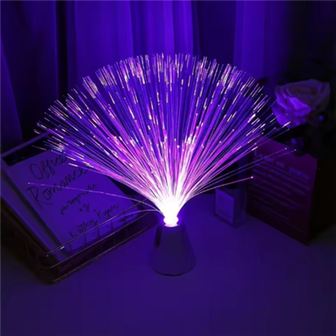
- PMMA Optical Fiber: Made from high-purity Polymethyl Methacrylate (a type of optical-grade plastic). It is highly flexible, lightweight, and specifically engineered for decorative and architectural lighting.
- Glass Optical Fiber: Made from ultra-pure silica glass. It consists of extremely thin strands gathered into a bundle, historically widely used in telecom and high-temperature industrial environments.

2. Head-to-Head Comparison
To give you a clear selection reference, let's break down their performance across four key dimensions:
1) Flexibility & Durability (Winner: PMMA)
PMMA: Plastic fibers are incredibly tough and flexible. They can be bent at sharp angles around architectural corners without breaking or losing light efficiency. This makes them exceptionally easy to handle on construction sites.
Glass: Glass fibers are inherently brittle. If bent past their minimum bend radius, individual microscopic glass strands will snap, leading to dark spots along the cable.
2) Cost-Effectiveness (Winner: PMMA)
PMMA: PMMA is far more economical, both in raw material costs and installation labor. It can be easily cut to length on-site using a simple hot knife or cutter, with no specialized polishing tools required.
Glass: Production of high-purity glass bundles is complex and expensive. Furthermore, installing glass fiber requires skilled technicians and precision termination kits, which drives up overall project budgets.
3) Light Efficiency & Attenuation (Winner: Glass for long distances)
PMMA: PMMA has slightly higher attenuation (light loss over distance) than glass. It is perfect for spans up to 15–20 meters. For longer runs, high-power light engines or dual-end illumination are recommended.
Glass: Glass fiber has superior light transmission and extremely low attenuation. It can carry light over much longer distances without fading, and it boasts excellent thermal stability, meaning it can withstand heat up to $200^\circ\text{C}$ from high-power halogen light sources.
4) Safety & Application Versatility (Tie)
Both materials carry zero electrical current and generate no heat at the discharge point, making them 100% waterproof and safe for swimming pools, spas, and hazardous environments. However, PMMA is generally preferred for sensory spaces and interactive lighting because it does not shatter into dangerous shards if damaged.
3. Comparison Matrix for Engineering Buyers
| Feature | PMMA (Plastic Optical Fiber) |
Glass Optical Fiber |
| Material Composition | Optical Grade Polymer | Silica Glass |
| Flexibility | Excellent (Highly bendable) |
Fragile (Risk of snapping) |
| Material Cost | Budget-Friendly / Low | Premium / High |
| On-Site Installation | Easy (DIY cutting allowed) |
Complex (Requires special termination) |
| Max Temperature Resistance | Up to 80∘C–85∘C | Up to 200∘C+ |
| Best Used For | Pools, Star Ceilings, Sensory Rooms |
High-Heat Industrial, Ultra-Long Runs |

4. Final Verdict: Which One Should You Choose?
Choose PMMA Optical Fiber if your project involves:
Standard Architectural & Decorative Lighting: Starry sky ceilings, commercial floor/stair contouring, and architectural accent lines.
Waterproof Projects: Submerged lighting in swimming pools, waterfalls, and fountains where flexibility and long-term cost are key.
Tight Project Timelines: PMMA allows your onsite team to cut, bundle, and install quickly without waiting for custom factory lengths.
Choose Glass Optical Fiber if your project involves:
Extreme Heat Environments: Lighting fixtures placed inside saunas, steam rooms, ovens, or right next to high-intensity halogen bulbs.
Ultra-Long Distances: Where light engines must be placed very far (25+ meters) from the actual lighting output point.
Conclusion
For 90% of modern architectural and decorative lighting projects, PMMA Plastic Optical Fiber is the clear winner due to its superior flexibility, lower cost, and ease of installation. It offers designers the creative freedom to trace any architectural curve seamlessly.
Partner with a Professional PMMA Fiber Manufacturer
We offer a comprehensive range of premium PMMA side-glow and end-glow fibers, custom fiber optic cable bundles, and high-efficiency LED light engines. Contact our technical sales team today to get a custom solution blueprint and wholesale pricing for your next architectural project!
Please send me an inquiry for more information if you have any interests and demends.
Contact person: Freya Shao
E-mail address: yll@txpof.com
Phone/Whatsapp: +86 19505282863
Wechat: Freya-TXPOF
Web: http://www.fibretx.com