Why Use Fiber Optics For Lighting?
Why Use Fiber Optics For Lighting?
1. Using fiber for remote lighting has many advantages, some of which are more important for special types of applications than others.
Heat-Free Lighting: Since the light source is remote, the fiber transmits the light but isolates the heat from the light source from the illumination point, an important consideration for lighting delicate objects, such as in museum displays, that could be damaged by heat or intense light.
2. Electrical Safety: Underwater lighting such as used in swimming pools and fountains or illumination in hazardous atmospheres can be done safely with fiber optic lighting, since the fiber is nonconductive and the power for the light source can be placed in a safe location. Even many lights are low voltage.
4. Precise Spotlighting: Optical fiber can be combined with lenses to provide carefully focused light on extremely small spots, popular for museum exhibits and jewelry displays, or simply light a specified area precisely.
Durability: Using optical fiber for lighting makes for much more durable lighting. Optical fiber, either plastic or glass, is both strong and flexible, much more durable than fragile light bulbs.
5. The Look of Neon: Fiber that emits light along its length, generally called edge-emitting fiber, has the look of neon tubes for decorative lighting and signs. Fiber is easier to fabricate, and, since it is made of plastic, is less fragile. Since lighting is remote it can be placed at either or both ends of the fiber and sources can be safer since they are low voltage sources.
6. Vary the Color: By using colored filters with white light sources, fiber optic lighting can have many different colors and by automating the filters, vary colors in any preprogrammed sequence.
7. Simpler Installation: Fiber optic lighting does not require installing electrical cables to the light locator and then installing bulky light fixtures with one or more bulbs on location. Instead, a fiber is installed to the location and fixed in place, perhaps with a small focusing lens fixture, a much simpler process. Often several fibers can use a single light source, simplifying installation even more.
8. Easy Maintenance: Lighting in hard to access areas like high ceilings or small spaces can make changing light sources difficult. With fiber, the source can be in an easily accessible location and the fiber in any remote place. Changing the source is no longer a problem.
How Fiber Optic Lighting Works?
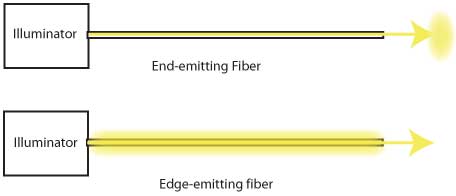
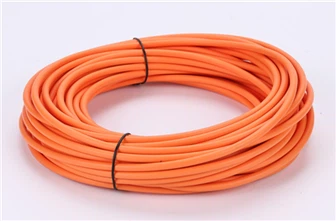
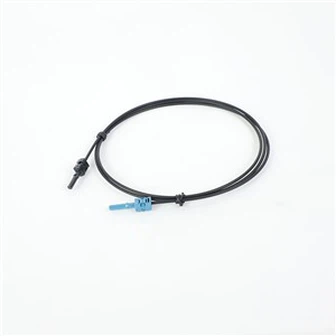
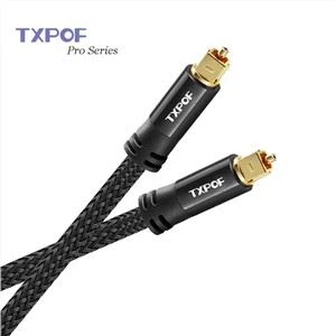
Fiber optic lighting uses optical fiber as a "light pipe," transmitting light from a source through the fiber to a remote location. The light may be emitted from the end of the fiber creating a small spotlight effect (also called "end glow") or emitted from the outside of the fiber along its length, looking like a neon or fluorescent tube (also called "side glow").
The light source is usually called a "fiber optic illuminator" and consists of a bright light source and often some optics to efficiently focus light into the fiber. Sources must be bright, so quartz halogen or xenon metal halide lights are commonly used. Smaller fibers may also use LEDs which very efficiently couple light into fibers but do not achieve the light levels of the other lamps.
Optical fibers used for lighting are similar to fibers used in communications, but optimized for transmitting light not high speed signals. The fibers consist of a core that transmits the light and an optical cladding that traps the light in the core of the fiber. Unlike communications fibers that use small cores to maximize bandwidth, lighting fibers use large cores with thin claddings to maximize coupling of the light from the illuminator into the fiber. Side-emitting fibers have a rough interface between the core and the cladding to scatter some of the light out of the core along the length of the fiber to create a consistent lighted look similar to neon light tubes.
Lighting fibers can be made of glass, just like communications fibers, or plastic. If the fibers are glass, they are usually very small diameter and many are bundled together in one jacketed cable to provide enough light transmission. Larger diameter plastic fibers are also used, perhaps more commonly, because they are inexpensive and easier to install, but they have higher light loss and cannot withstand as hot a temperature, sometimes limiting the light input from a source.
Contact :
Jiangsu TX Plastic Optical Fibers Co., Ltd
Website: https://www.fibretx.com/
Contact : Jojo Leng
Email : yy@txpof.com
Mobile/Wechat: +86-19505282862
Whatsapp:+0086-19505282862