Wearable Fiber Optic Technology Is More Powerful Than You Think
In the 1960s, it was recognized that fiber optics could be used for light transmission, and in the 1970s, they began to be used for signal transmission. Over time, fiber optic technology has matured and has been gradually applied to the field of smart wearable textiles for communication, display, sensing, and monitoring functions.

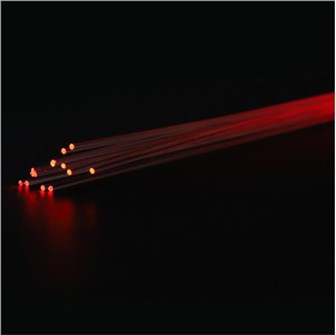
In recent decades, driven by the demand of young consumers for unique and fashionable clothing, fiber optic luminescent fabrics have been successfully applied to textile and apparel development. Unlike traditional optical fibers used for signal transmission (light is reflected inside the fiber core and emitted at the end), as shown in Figure a, wearable fiber optic luminescent clothing utilizes the side-emitting principle of optical fibers. This is typically achieved by disrupting the fiber core structure or bending the fiber, preventing light from being completely reflected inside the core and causing it to "leak" out, producing the side-emitting effect, as shown in Figures b and c.

The fibrous appearance of optical fibers allows them to be used in fabric weaving like traditional textile materials. Optical fibers, especially polymer optical fibers (POFs), possess advantages such as flexibility, lightweight, durability, low cost, and resistance to electromagnetic interference. Furthermore, fiber optic fabrics are easy to form, simple to connect, and have good biocompatibility. By integrating optical fibers into suitable textile structures, light transmission or emission can be achieved in any part of wearable devices, and physiological parameters can be monitored by measuring mechanical variables to achieve sensing functions.
The penetration of optical fibers in the fashion industry is becoming a new growth engine for the global optical fiber market. According to CRU data, the global optical fiber market size exceeded US$13 billion in 2023 and is projected to reach US$26 billion by 2030, with emerging application areas increasing from the current 10% to 35%. Fashion textiles, as one of the fastest-growing application scenarios for technology, are attracting accelerated deployment across the industry chain. Market analysis shows that fiber optic fashion products have formed three major application directions:
1. High-end fashion: Luxury brands have begun to adopt programmable light-emitting fiber optic fabrics. At the 2024 Paris Fashion Week, a brand launched a fiber optic dress that achieved color gradation through posture sensing, with a single item priced over $50,000;
2. Functional apparel market: Sports brands are integrating fiber optic sensing technology into outdoor clothing, enabling real-time monitoring of heart rate and body temperature. Related products have a premium of over 30%;
3. Rehabilitation and wearable scenarios: The technology from Hong Kong Polytechnic University has been licensed to the medical field. Fiber optic fabric uses color feedback to assist elderly patients in rehabilitation training, opening up a professional medical market.


QYResearch research indicates that although fiber optics for fashion currently account for less than 2% of the overall market, this segment has already achieved a growth rate of 18%, far exceeding the average level of 5.8% in the communications field. With the commercialization of space division multiplexing technology (single fiber capacity expected to exceed 1Pb/s by 2025) and a 30% reduction in silicon photonics integration costs, the unit price of fiber optic fabrics is projected to fall to 1.5 times that of ordinary functional fabrics by 2027, further stimulating the mass consumer market.
Industry experts predict that as China's fiber optic production capacity exceeds 70% by 2030, coupled with the capacity synergy of Southeast Asian textile manufacturing bases, fiber optic fashion products are expected to reach a market size of tens of billions of yuan by 2028, becoming the third largest application area for fiber optics after communications and data centers. When fiber optics are woven into clothing, the fusion of technology and aesthetics is reshaping the future landscape of the fashion industry.
Our company has cultivated deep expertise in China's fiber optic industry for many years.
If you are also interested, please feel free to contact me.
Contact person: Cheryl Shi
E-mail address: zyy@txpof.com
Phone/Whatsapp: +86 19505282817
Wechat: Cheryl-TXPOF
Web: http://www.fibretx.com