Performance analysis of plastic optical fiber and its application in automobiles
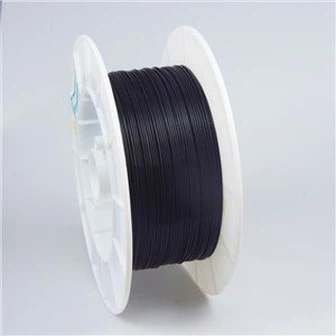
Performance test of plastic optical fiber Local area network applications generally work in a normal temperature and non-radiation environment. For plastic optical fibers used for communication with a temperature of -50 to 70 ℃, there is no problem when used at room temperature. The application wavelength of 650nm and numerical aperture 0.5 has good fiber penetration. In addition, the loss coefficient of general PMMA plastic optical fiber has been stabilized below 180 dB/km, which can meet the needs of short-distance local area networks. The lower the loss coefficient, the longer the transmission distance. Long, so this article tests the loss coefficient and packet loss rate of plastic optical fibers.
The materials of plastic optical fiber mainly include PMMA, polystyrene (PS) and polycarbonate (PC). PMMA plastic optical fiber is used in industry because of its stable technology, low cost, strong anti-radiation ability, and low loss at a specific light wavelength. The control bus system and the Internet field have good development prospects. It has the advantages of high transmission bandwidth, strong anti-interference performance, and stable signal. It has become industrial application sensing, medical field, home intelligence, office automation, industrial control network, and vehicle A highly competitive product that replaces copper cables in the airborne communication network and automotive automation applications.
The MOST media-oriented system transmission network protocol was developed by Oasis Silicon System of Germany and supported by BMW, Mercedes-Benz, Harman and other companies.
MOST is a solid line transmission, and it is a plastic optical fiber line transmission, and it can be a plastic optical fiber (more cost-effective). The use of plastic optical fiber can increase the amount of information transmission, and the future transmission improvement potential is also higher, and it is also more stable Transmission (because there is no ground loop and no electromagnetic interference).
The production process of MSOT plastic optical fiber line is the use of automated MOST plastic optical fiber special production line, and its technical level and automatic production control level are internationally first-class. It can complete the entire production process of pay-off, optical cable printing, wire cutting, stripping, coiling, optical fiber end face treatment, laser welding, attenuation measurement and packaging. At the same time, it is equipped with MOST special plastic optical fiber quality control equipment, including digital microscope and camera, optical fiber height measuring instrument, loss tester, tensile tester and computer control integrated control output instrument to monitor the quality of the finished products. All plastic optical fiber cables (POF) are 100% factory tested.